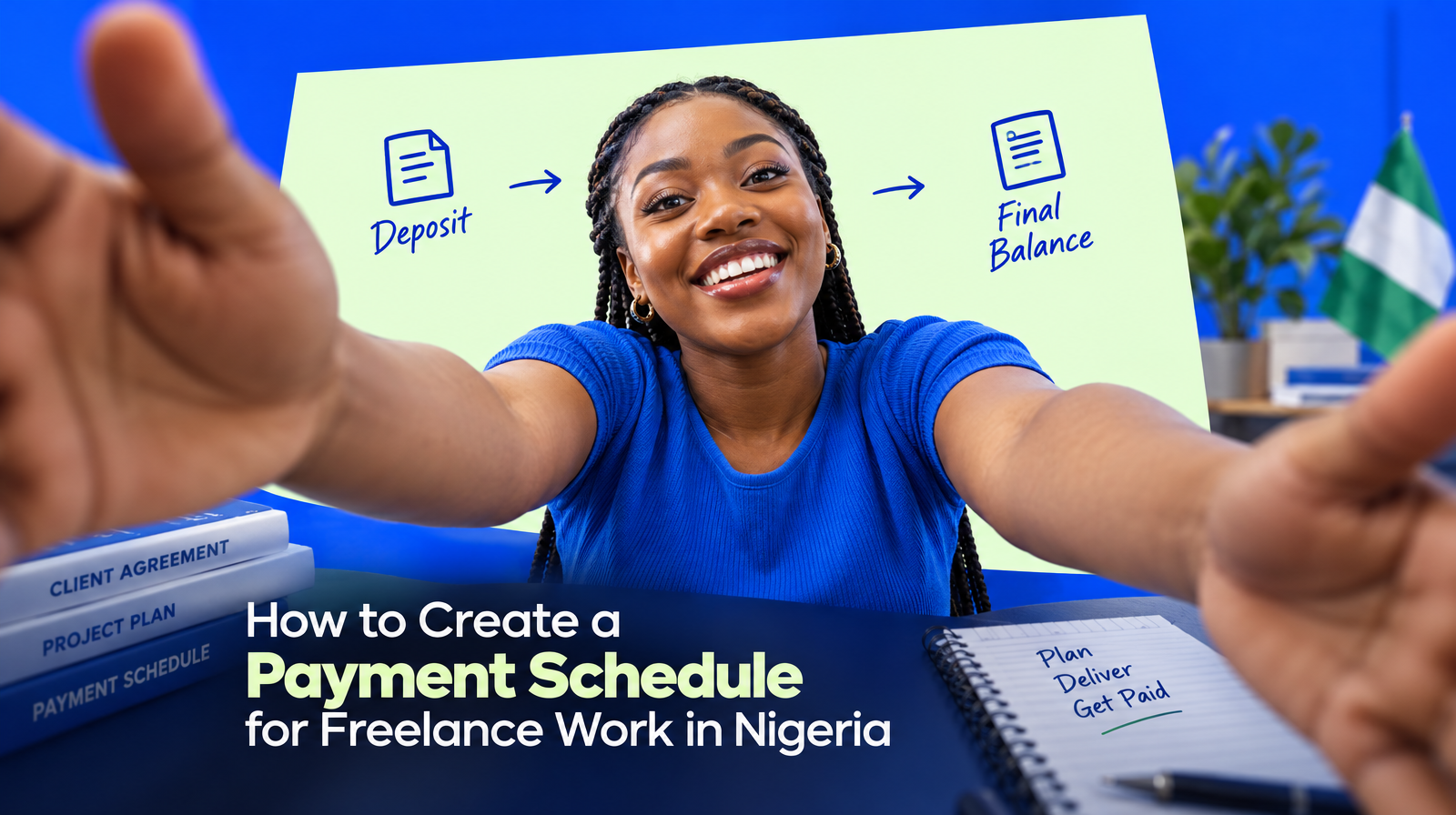

The customer payment experience is part of the service you provide, not merely the final administrative step. Nigerian freelancers, gig workers, entrepreneurs and small businesses can improve it by making five things clear: what the customer is paying for, how much is due, when payment is expected, how to pay and what happens next.
A payment process does not need to be complicated to feel professional. It needs to match the way your business serves customers and remove avoidable uncertainty from the journey.
What makes a customer payment experience clear?
From the customer’s perspective, payment is one stage in a wider journey:
- They make an enquiry or place an order.
- The business confirms what will be provided.
- The customer receives the amount and payment instructions.
- Payment is made.
- The business confirms the next service, delivery or collection step.
Problems often arise when these stages are disconnected. A customer may receive an account detail without an order summary, an amount without a deadline or a payment request without any explanation of what happens afterwards.
A clear payment experience connects the financial request to the customer’s actual commitment.
Before sending a payment instruction, ask whether the customer can answer:
- What am I paying for?
- How much do I owe?
- Is this the full amount, a deposit or a balance?
- When should I pay?
- Which payment details should I use?
- What should I do after paying?
- When will the business take the next step?
If the answer to any of these questions is difficult to find, the process can probably be improved.
1. Explain exactly what the customer is paying for
A payment request should relate to a specific product, order, booking or service.
For an online retailer, this may mean naming the product, quantity and agreed order details. For a Nigerian freelancer, it may mean identifying the project, deliverable or milestone covered by the payment. For a service business, it may mean stating whether the payment is for a consultation, booking, deposit, completed service or outstanding balance.
Avoid sending a message that only says:
Please make payment to the details below.
That instruction may be technically sufficient, but it leaves important context unstated. A better message identifies the commercial reason for the payment first.
For example:
Payment for logo design project, first milestone: ₦[amount].
Or:
Payment for two customised shirts, including agreed alterations: ₦[amount].
The example should be adapted to the business’s real terms. The purpose is to connect the payment to something the customer recognises.
Include the right order or service details
Depending on the transaction, the customer may need to see:
- Product or service name
- Quantity
- Agreed scope of work
- Order or reference number
- Deposit, milestone or balance status
- Delivery, collection or appointment arrangement
- Any agreed additional cost
The aim is not to create unnecessary paperwork. It is to ensure that both the customer and business are referring to the same commitment.
2. Make the total amount easy to find
Customers should not have to search through a long WhatsApp conversation, email thread or social-media exchange to confirm the amount due.
State the amount clearly and use naira where applicable. If the payment is only part of the total, label it accurately:
- Total order amount
- Deposit required
- Balance due
- Milestone payment
- Outstanding amount
Also explain whether related costs are included. If delivery, materials or an extra revision has been agreed separately, state whether it forms part of the amount now due.
This is particularly useful for small businesses managing several customer conversations at once. Clear amounts help reduce misunderstandings and make it easier to connect incoming payments to the correct order or service.
3. Tell customers when payment is due
“Pay when you can” may sound flexible, but it does not give the customer a clear next step. Payment timing should reflect how the business actually works.
A customer may need to pay:
- Before an order is prepared
- Before a booking is confirmed
- At the start of a project
- When a particular milestone is completed
- Before collection or delivery
- After the service has been delivered
Explain the timing in plain language. For example:
Your deposit confirms the booking. Work will begin once the agreed payment is received.
Or:
The remaining balance is due before collection.
The wording should not promise a process the business does not follow. If the business reviews payments manually, do not imply an instant confirmation. If work begins only after payment has been checked, say so.
Clarity at this stage helps the customer understand the relationship between payment and the next business action.
4. Provide payment instructions that reflect your real process
Payment instructions should be current, consistent and specific to the customer’s transaction.
They may need to include:
- The approved payment method
- The correct account or payment details
- The name the customer should look for
- The amount to pay
- A payment reference, if one is required
- The deadline or expected timing
- Instructions for sharing confirmation, if applicable
Do not copy old payment details from a previous message without checking them. A business may change its approved payment arrangement, use different details for different transactions or require a particular reference for record-keeping.
It is also important not to add unnecessary steps. If the business does not need the customer to send a screenshot or separate confirmation, do not request one simply because it appears in an old template.
A professional payment message should describe what the business actually needs.
5. Explain what happens after payment
The customer’s uncertainty does not end when they press “send”. They may still want to know whether the order will be prepared, whether a booking is confirmed or when the next service step will happen.
Add one clear next-step statement to the payment communication:
- “After the payment is checked, we will confirm the collection arrangement.”
- “Once the deposit is received, the appointment will be added to the schedule.”
- “After payment is confirmed, preparation for the order will begin.”
- “We will share the next project step after reviewing the payment.”
Use a time expectation only when the business can maintain it. Avoid promising an immediate response, delivery time or notification if the process does not reliably support that promise.
The strongest message is not always the most elaborate one. It is the one that accurately tells the customer what to expect.
6. Review payment communication from the customer’s perspective
Business owners usually know their own process by memory. Customers do not have that advantage.
To audit the experience, choose a recent customer transaction and review every message from the customer’s point of view. Look at the enquiry, quotation, order confirmation, payment request and post-payment follow-up together.
Ask:
- Is the product or service described consistently?
- Does the amount match the earlier agreement?
- Can the customer distinguish a deposit from the full amount?
- Is the payment timing stated in one obvious place?
- Are the payment details easy to identify?
- Does the customer know what to do if something is unclear?
- Is the next service, delivery or collection step explained?
- Do the messages sound like they came from the same business?
This audit can be done using the materials a business already has. Review customer messages, order notes, invoices, service descriptions and payment records. No new platform is required to identify unclear wording.
A useful test is to ask someone unfamiliar with the transaction to read the payment request. If they need additional background before understanding it, the customer probably does too.
7. Create consistent templates without sounding impersonal
Templates can help Nigerian businesses communicate professionally, especially when the same types of payments happen repeatedly. A freelancer may send project payment instructions often. An online seller may confirm similar orders every day. A service provider may collect deposits for recurring appointments.
A useful template should contain fixed sections and editable details:
Payment summary
- Customer name
- Product or service
- Amount due
- Payment timing
- Approved payment details
- Reference, if required
- Next step
Keep the language concise and leave space for the details that make each transaction specific. A template should reduce omissions, not replace judgement.
Review templates whenever the business changes its process. An old message can create confusion if it refers to an arrangement, timing or payment detail that is no longer accurate.
8. Connect payment records to orders and services
The customer experience and the internal business record should support each other.
When a payment arrives, the business should be able to identify the relevant customer and connect the transaction to an order, project, booking or expense. This can be done using a consistent reference, a simple spreadsheet, a dated record or another method that fits the business.
Useful fields may include:
- Customer or supplier name
- Date
- Product, service or expense description
- Amount
- Payment status
- Related order or project
- Follow-up action
This connection helps the business answer practical questions: Has this customer paid the deposit? Is the order ready for the next step? Is there a balance outstanding? Which service does this payment relate to?
For growing Nigerian businesses, keeping these records connected can make customer communication more precise. It also prevents the payment conversation from becoming detached from the work being delivered.
9. Choose digital payment support that fits the way you serve customers
The right digital payment approach should fit the business’s real customer journey.
A freelancer managing project milestones may need a different process from an online retailer handling product orders. A gig worker may need a straightforward way to receive payment for completed work, while a startup may be coordinating several types of online transactions.
When reviewing payment support, consider:
- How customers currently place orders or request services
- Whether payments are full, partial or milestone-based
- How customers receive payment instructions
- How the business records transactions
- How payment connects to delivery, collection or service completion
- Whether the process is understandable to non-technical customers
- Whether the arrangement fits the business as activity changes
Do not choose based only on a feature list. A payment approach is useful when it supports the customer communication and operating process around it.
Boldswitch is a Nigerian fintech platform providing digital payment solutions for individuals and businesses. Its proposition, “Digital Payment Without Limits,” reflects a focus on digital payment infrastructure for people and businesses managing money movement online. Nigerian freelancers, gig workers, entrepreneurs, startups and small or medium-sized businesses can learn more at boldswitch.ng.
A customer payment experience checklist
Before sending a payment request, confirm that:
- The customer knows what the payment covers.
- The total amount and currency are clear.
- Any deposit, balance or milestone is labelled.
- The payment timing is stated.
- The approved payment details are current.
- Any required reference is explained.
- The instructions match the business’s actual process.
- The customer knows what happens after payment.
- The transaction can be connected to the correct order, service or project.
- The wording is concise, professional and easy to understand.
Conclusion
Improving the customer payment experience in Nigeria begins with communication, not complexity. Make the commercial commitment clear, state the amount and timing, provide accurate instructions and explain the next step.
Then review the process as a customer would. If the payment request makes sense without a long explanation or a search through previous messages, the business is already removing an important source of uncertainty.
Payment is part of how a business serves people. When it is connected to the order, service and next step, the customer journey becomes easier to follow and the business has a clearer foundation for managing its transactions.