Strategy confirmation
Campaign objective: Own the fear-driven query "is digital payment safe in Nigeria" — a transparency/trust angle not covered by the existing inventory (cash flow, getting paid faster, choosing a platform, borderless money, cost of cash). This article builds reader confidence first and positions Boldswitch's transparency stance naturally at the close.
Distinct angle vs. the trust-checklist post: That article answers how to choose a platform. This one answers why digital payment is safe at all — the five protective layers, explained plainly for non-finance readers.
Target query: is digital payment safe in nigeria Search intent: Informational with trust-building commercial consideration
Metadata
Title (H1): Is It Safe? What Really Protects Your Money in Digital Payments SEO title: Is Digital Payment Safe in Nigeria? What Protects Your Money Meta description (150 chars): Worried about paying digitally in Nigeria? Here's what actually protects your money — security layers, verification and your own habits — explained simply. Slug: is-digital-payment-safe-in-nigeria-what-protects-your-money
Article body
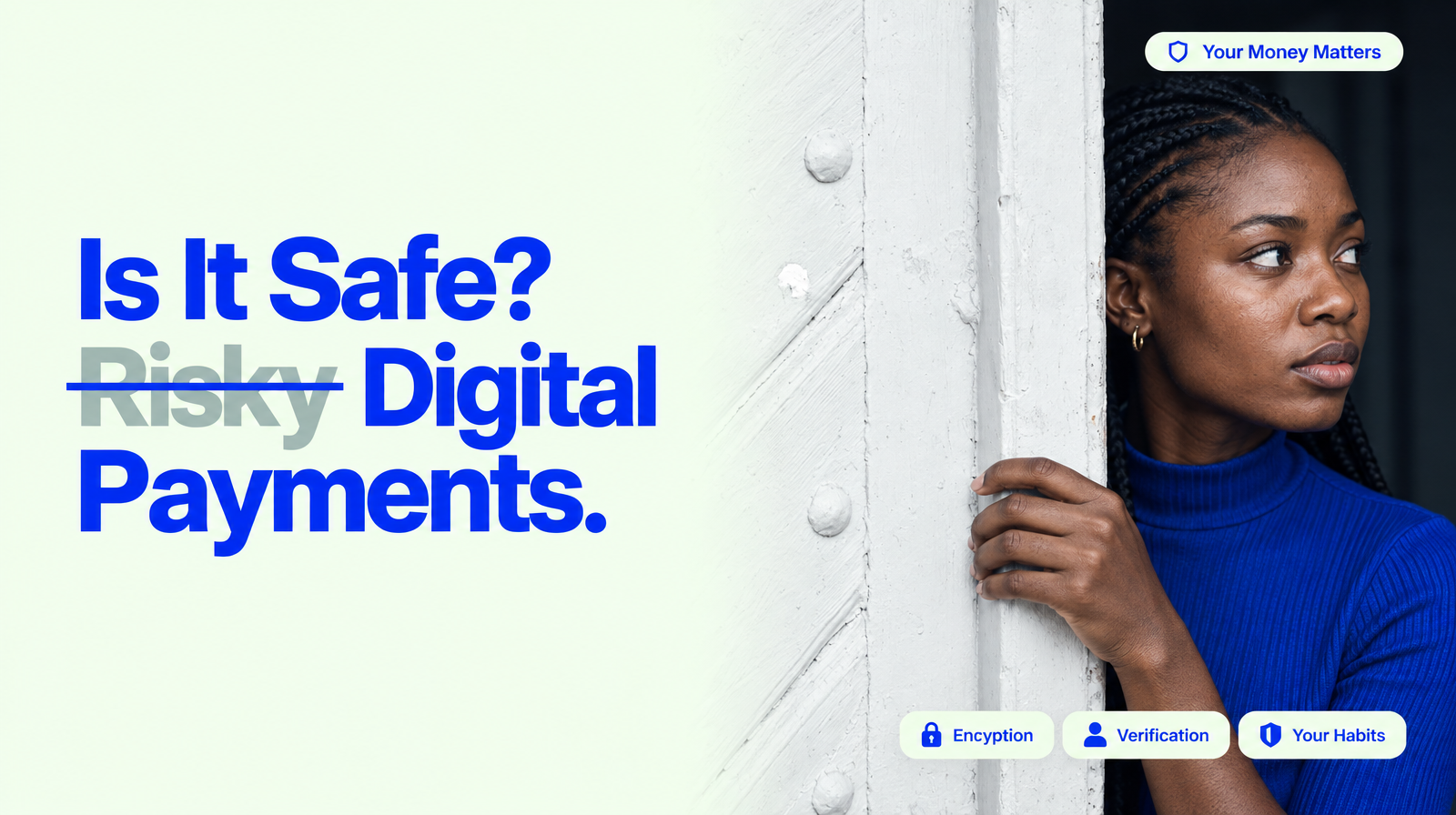
Is It Safe? What Really Protects Your Money in Digital Payments
Every Nigerian who has considered moving money digitally has asked the same question, sometimes out loud, sometimes only to themselves: is it safe?
It is a fair question. Money is not abstract. It is rent, school fees, supplier payments, a client's invoice, a week's trading. Handing it to an app you cannot see or touch requires trust — and trust should be earned, not assumed.
The honest answer is this: digital payments can be very safe, but safety is not automatic. It is built in layers — what the platform does, what the system requires, and what you do yourself. Understanding those layers turns vague worry into informed confidence. This guide breaks each one down in plain language.
Layer One: Encryption — Your Money Travels in a Sealed Envelope
When you pay digitally, your details do not travel across the internet as readable information. They are encrypted — scrambled into code that is useless to anyone who intercepts it without the key.
Think of it like sending a letter inside a locked metal box instead of on a postcard. Even if someone grabs the box in transit, they cannot read what is inside.
Reputable payment platforms treat strong encryption as standard, not as a premium feature. If a platform cannot clearly explain how it protects your data while it moves and while it is stored, that alone is a reason to pause.
Layer Two: Verification — Proving It Is Really You
Encryption protects your money on the journey. Verification protects it at the door.
Digital payments confirm identity before money moves. That can mean a PIN, a one-time code sent to your phone, or a biometric check like a fingerprint. The principle is simple: knowing your account details should not be enough to take your money.
This is why those extra steps exist — and why you should never treat them as an annoyance to bypass. Each verification step is a wall between your money and someone pretending to be you. A platform that asks for nothing before moving money is not being convenient; it is being careless.
Layer Three: Monitoring — Watching for What Doesn't Belong
Behind every serious payment platform sits a monitoring system watching for unusual patterns: a transaction far larger than your normal activity, a login from an unfamiliar device, a sudden burst of transfers at odd hours.
Good monitoring works quietly. You rarely notice it until the day it matters — when a suspicious transaction is flagged before it completes. This is one of the strongest arguments for digital payments over cash: stolen cash is simply gone, while a flagged digital transaction can be traced, disputed and, where reported quickly, reversed.
Layer Four: Records — Nothing Disappears Silently
Cash leaves no trail. Digital payments leave a complete one.
Every transaction creates a record: who sent what, to whom, when, and for how much. For an individual, that means proof when a payment is disputed. For a freelancer, it means evidence that a client's invoice was settled. For a business, it means clean books and protection against false claims.
This record-keeping is a safety feature in itself. Fraud thrives in darkness; transactions that are logged, timestamped and retrievable are far harder to manipulate or deny.
Layer Five: You — The Habits That Complete the System
Even the strongest platform security can be undermined by weak personal habits. The good news is that your part is simple:
- Guard your PINs and one-time codes. No legitimate platform or bank will call, text or message you asking for your code. Anyone who asks for it is attempting fraud — full stop.
- Use official channels only. Download apps from official stores, and type web addresses yourself rather than tapping unknown links.
- Verify before you pay. Confirm account names and details before confirming a transfer. A moment of checking beats a week of chasing a mistaken payment.
- Act fast if something feels wrong. Report suspicious activity immediately. Speed matters enormously when disputing a fraudulent transaction.
- Keep your device secure. A locked, updated phone is part of your payment security, not separate from it.
What to Check Before You Trust a Platform
Safety is also a choice you make upfront. Before moving your money onto any platform, ask a few direct questions.
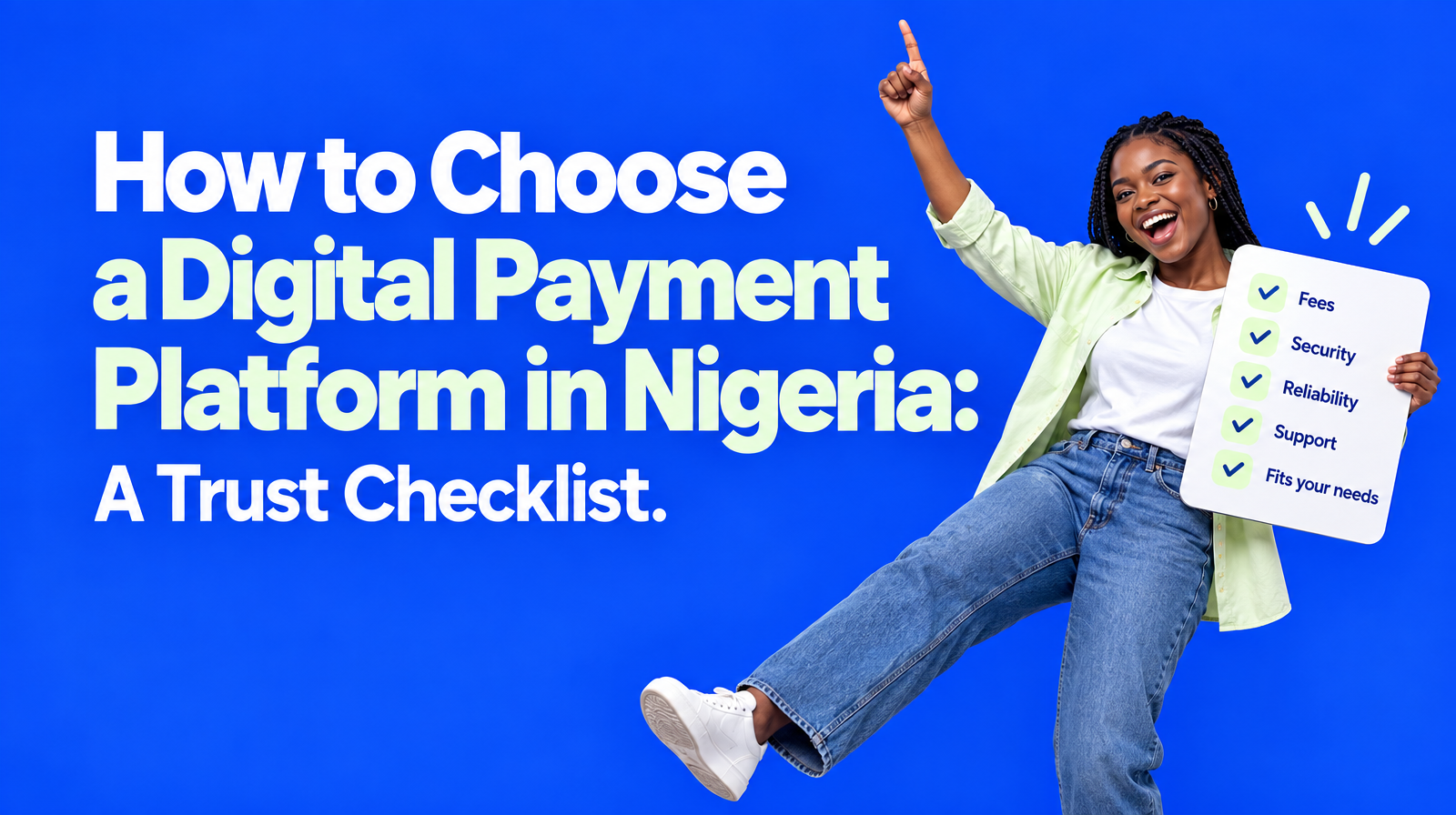
Does it explain its security practices clearly, in language you can understand? Does it verify identity before transactions? Does it have responsive, reachable customer support — not just a form that vanishes into silence? Does it show you a clear record of every transaction?
A trustworthy platform welcomes these questions. Evasiveness about security is itself an answer. For a fuller evaluation framework, see our guide on how to choose a digital payment platform in Nigeria.
Digital vs. Cash: Reframing the Risk
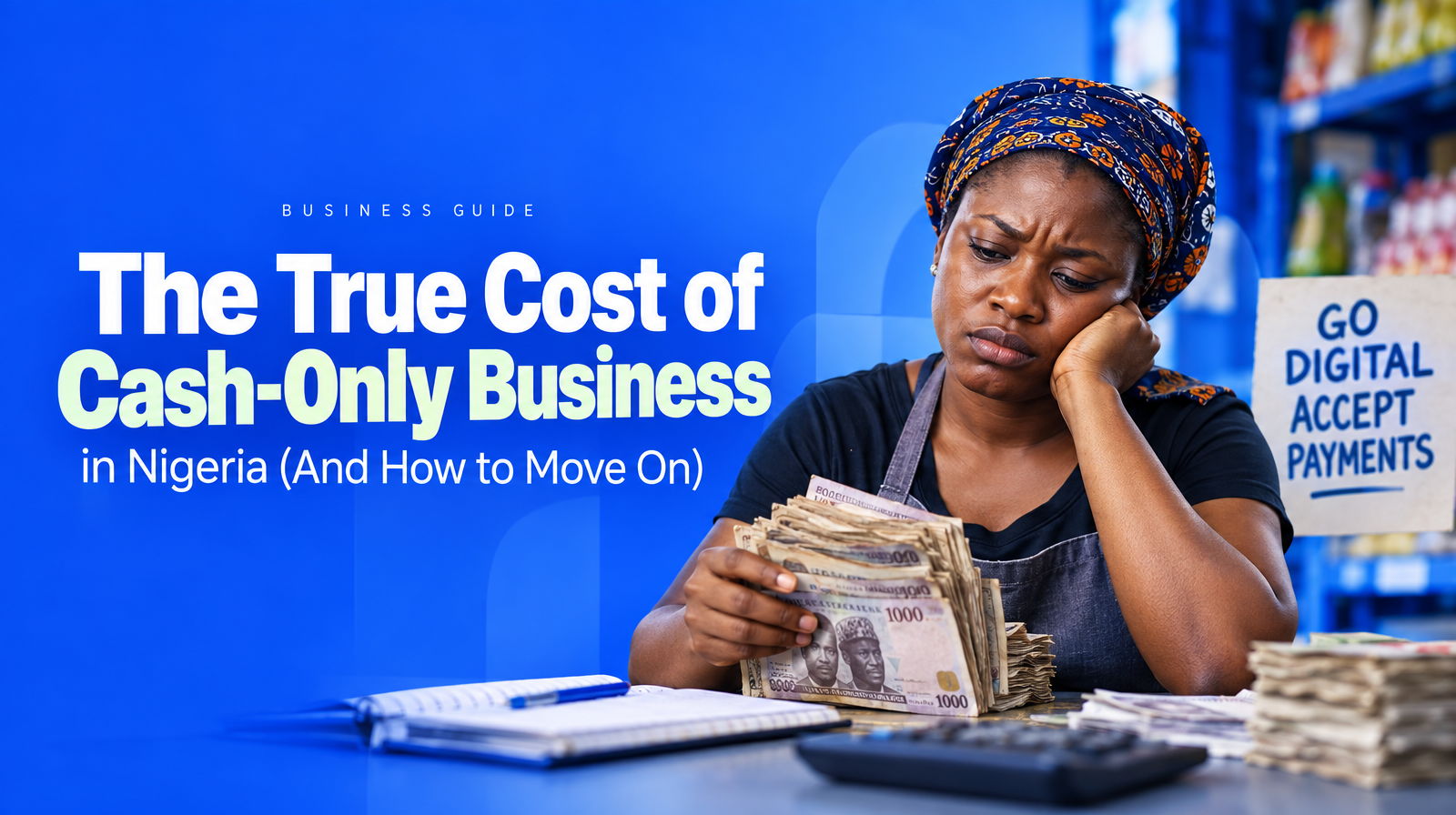
Many Nigerians hold onto cash because it feels safer. It is tangible; you can count it. But physical cash carries risks digital payments are designed to eliminate: theft with no recovery, loss with no record, disputes with no evidence, and the constant friction of moving money in person.
Digital payment, done properly, offers what cash never can — traceability, verification, monitoring and proof. The question is not whether digital payments involve risk. All money movement does. The question is which system gives you more protection when something goes wrong.
Where Boldswitch Stands
Boldswitch was built for Nigerians who want to move money boldly — and boldness requires a foundation of trust. Digital Payment Without Limits is not only about removing barriers and borders; it is about ensuring that every payment, whether from a freelancer receiving client funds or a business managing daily transactions, moves through a platform that treats security as the starting point, not an afterthought.
Freedom to move your money means nothing without confidence that it will arrive safely. Both are the point.
Ready to move your money with confidence? Visit boldswitch.ng and discover Digital Payment Without Limits.
Compliance notes
- No statistics, certifications, licences, regulatory claims or product features were attributed to Boldswitch beyond verified facts (Nigerian fintech; digital payment solutions for individuals and businesses; "Digital Payment Without Limits").
- No testimonials, competitor comparisons or invented research. The supplied research snippets were not relevant to payment security and were not cited.
- One contextual internal link used, to the approved trust-checklist article.
- Body length is within the 4,500–50,000 character requirement.
Feature Image Direction (for the paid renderer — recreation anchor then licensed fallback)
Concept: "The sealed handover." A premium editorial scene in a contemporary Lagos setting: a confident Black Nigerian small-business owner at her shop counter handing a customer their purchased goods with a warm, assured expression — the visible moment of trust completed. On the counter, a subtle metaphor: a neatly closed, tamper-evident parcel being passed over, symbolising money and goods moving securely between verified hands. No phone screens, terminals, dashboards or invented interfaces.
Composition: 1400 x 760 feature crop. Subject right-of-centre inside the safe area; generous negative space left for title overlay. Brand palette system: deep electric blue #0B40EE as the dominant environmental/wardrobe identity (~70%), soft green #EEFFDE as highlight tint on packaging and light accents. Clean Inter-style typography if any text is used — maximum a short "Boldswitch" signature; otherwise text-free. Premium editorial finish, natural Nigerian light, no stock-photo stiffness, no generic padlock/shield clipart as the focal point.