
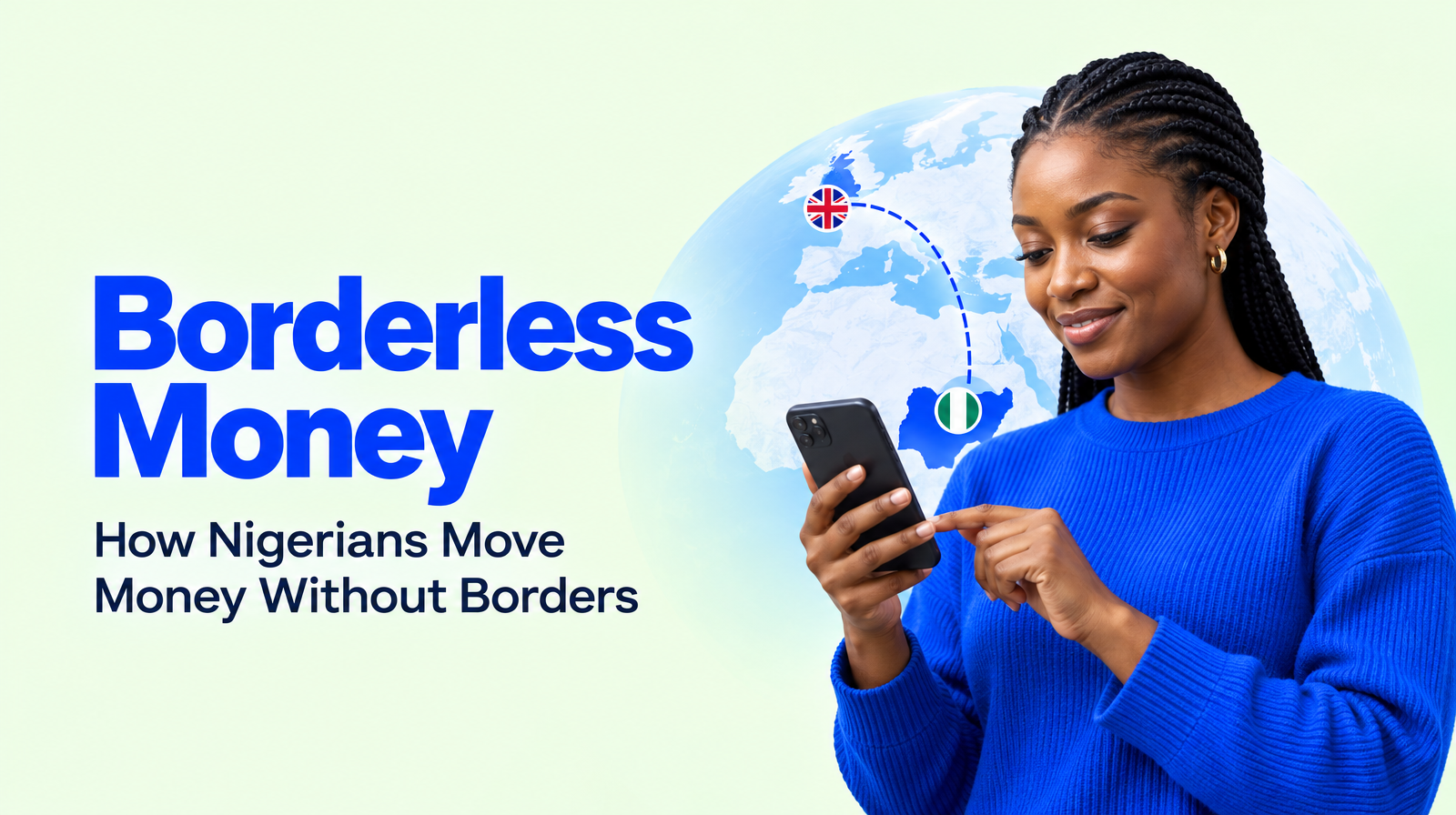
Money in Nigeria has never stayed still. It moves from a client in London to a designer in Lagos, from a trader in Onitsha to a supplier in Aba, from a brother in Abuja to his family in Enugu. What has changed is not how much money moves — it is how quickly people expect it to arrive, and how little tolerance they have left for barriers along the way.
For decades, moving money in or out of Nigeria meant queues, paperwork, unclear charges and long waits. Today, a new generation of digital payment platforms is rewriting that experience. This guide explains what borderless money movement really means, why it matters for Nigerians at every level, and what to look for when choosing a platform built for the way you actually live and work.
What "Borderless" Actually Means
Borderless money movement is simple in principle: the ability to send and receive value without geography becoming a barrier. In practice, it shows up in everyday moments:
- A freelance developer in Lagos delivers work for an overseas client and expects payment to reach her without a maze of middlemen.
- A small business owner pays a supplier across state lines and wants confirmation that the money has landed.
- A family supports relatives back home and wants the process to feel as normal as sending a message.
The common thread is expectation. Nigerians no longer accept that moving money should be harder than earning it.
Why This Matters More in Nigeria
Nigeria has one of the most entrepreneurial populations in the world. Freelancers sell skills to clients on other continents. Traders run businesses from their phones. Startups serve customers they have never met in person. In every one of these stories, payments are not an afterthought — they are the moment the entire effort becomes real.
When payment systems fail, everything downstream fails with them. A freelancer cannot invoice confidently. A shop cannot restock on time. A family cannot plan. That is why reliable, modern payment infrastructure is not a luxury in the Nigerian context. It is economic oxygen.
The Real Barriers Nigerians Face
Understanding borderless money means being honest about what gets in the way today:
Friction. Every extra step between sender and receiver — a form, a visit, a manual confirmation — is a chance for the payment to stall or fail.
Opacity. When charges and timelines are unclear, people plan badly. Businesses cannot forecast cash flow. Individuals cannot budget. Trust in the system erodes.
Access. Modern payment options must work for real people in real situations — not just for the technically confident. A payment platform that alienates everyday users has missed the point entirely.
These are the barriers a genuinely modern payment platform is built to remove: no unnecessary friction, no hidden surprises, no borders between you and your money.
What to Look For in a Modern Payment Platform
Whether you are an individual or a business, the same principles apply when evaluating where your money should move:
1. Clarity over cleverness. You should always understand what is happening with your money. Plain language beats technical jargon every time.
2. Built for Nigeria, not adapted to it. A platform designed with Nigerian users, businesses and realities at its centre will always serve you better than a foreign product with a local label.
3. One platform, many lives. Your financial life does not fit in one box. You might receive client payments, support family and run a side business in the same month. Your payment platform should handle that range without making you feel like you are stretching it.
4. Room to grow. The platform that works for you today should still work when your business doubles, your client base goes international, or your ambitions get bigger.
Where Boldswitch Fits
Boldswitch is a Nigerian fintech platform built around one proposition: Digital Payment Without Limits. It provides digital payment solutions for individuals and businesses — freelancers and gig workers who need fast digital payments, small and medium-sized businesses managing transactions online, entrepreneurs building ventures that need payment infrastructure that scales, and everyday consumers who want money to move without borders.
The point is not a feature list. The point is a philosophy: no barriers, no friction, no borders between Nigerians and their money.
If you are still figuring out the basics of getting paid promptly as a freelancer or small business, start with our earlier guide: How to Get Paid Faster in Nigeria: A Practical Guide for Freelancers and Small Businesses. It pairs naturally with this one — getting paid on time at home and moving money freely across borders are two halves of the same goal.
The Bigger Picture
Borderless money is not a trend. It is the direction of the Nigerian economy. Every year, more Nigerians earn from clients abroad, buy from sellers in other states and countries, and build businesses with no fixed address. The payment infrastructure beneath all of that activity has to match its ambition.
Nigeria's money should move as boldly as its people do.
Ready to move without limits? Visit boldswitch.ng to discover digital payment without limits.