Metadata
Title (H1, 65 chars): How to Choose a Digital Payment Platform in Nigeria: A Trust Checklist
SEO title: How to Choose a Digital Payment Platform in Nigeria
Meta description (152 chars): Before you move your money to any digital payment platform in Nigeria, check these five things — fees, security, reliability, support and fit for how you work.
Target query: how to choose a digital payment platform in Nigeria Search intent: Commercial investigation — the reader is comparing platforms before committing money. Topic cluster: Trust & transparency in Nigerian fintech
Angle rationale: The approved blog library covers getting paid faster (freelancer cash flow) and borderless money movement. The stored brief names an untapped opportunity: transparency content on fees, security and reliability. This article owns that ground with a new query, a new reader outcome (evaluate before you commit) and zero cannibalization.
Internal links used (approved inventory only):
- https://blog.boldswitch.ng/how-to-get-paid-faster-in-nigeria-a-practical-guide-for-freelanc
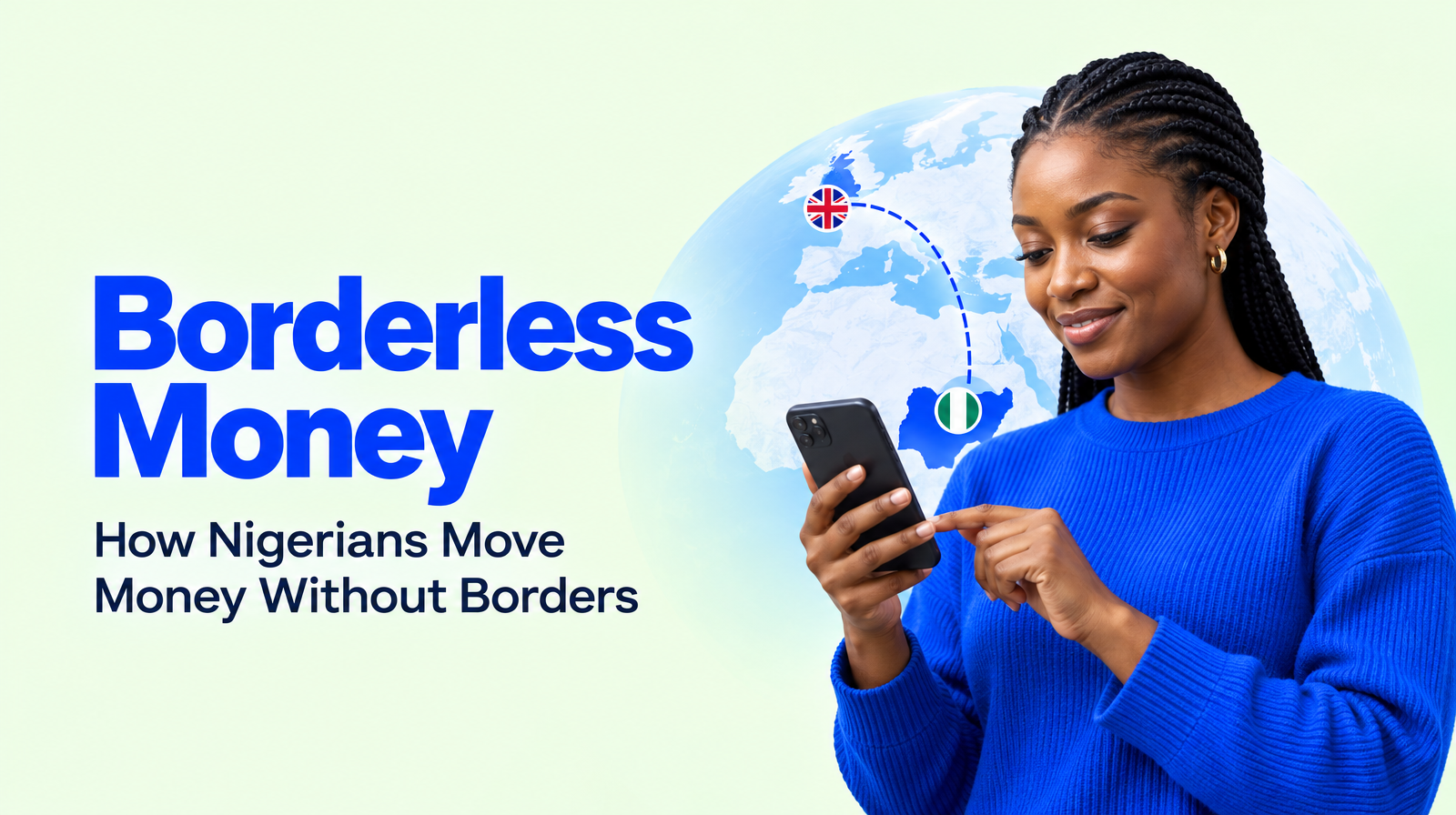
- https://blog.boldswitch.ng/borderless-money-how-nigerians-move-money-without-borders
Feature Image Brief (Creative Studio asset)
Objective: A premium editorial image visualising due diligence before trusting a platform with your money — distinctly Nigerian, with no invented product UI.
Visual story: A confident Black Nigerian businesswoman at the counter of her contemporary Lagos home-wares shop, reviewing printed documents and a calculator beside a neatly arranged display of her products — the deliberate moment of a business owner weighing an important decision. Warm natural daylight, premium editorial photography style. Brand palette dominant: deep electric blue (#0B40EE) in her attire and a structural accent wall, soft green (#EEFFDE) in packaging and highlight tones. The Boldswitch icon appears once as a clean brand signature inside the safe area. No phone screens showing invented apps, no payment terminals, no dashboards, no competitor names, no charts with fabricated figures. Optional short headline, exact and legible: "Trust Is Earned. Check First."
Composition: 1080 × 1350, focal subject centred-left inside the safe area, generous negative space upper-right, hierarchy: woman → documents/products → brand signature. At least 8% padding from every canvas edge; no cropped faces, hands or products.
Full Article Body
How to Choose a Digital Payment Platform in Nigeria: A Trust Checklist
Nobody wakes up excited to compare payment platforms. You do it because something is at stake. Your client's invoice. Your supplier's deadline. The money your family is waiting on. In Nigeria, where every naira of your business has usually been earned the hard way, the platform that carries your money is not a small decision — and it should not be treated like one.
The problem is that most payment platforms look identical from the outside. Clean websites. Bold promises. Words like "fast" repeated until they stop meaning anything. So how do you actually tell them apart?
This guide gives you five concrete checks you can run this week — before you sign up, before you deposit, before you move a single serious transaction. Run any platform through them. Including us.
1. Follow the fees to their final destination
The first trust test is arithmetic. Not what a platform says it charges, but what a transaction actually costs you by the time the money lands.
Many platforms advertise an attractive headline rate, then reveal the real cost in layers: a charge to receive, a charge to hold, a charge to withdraw, a charge for currency conversion, and occasionally a charge you only discover on your statement. Individually each one looks small. Together they can quietly tax your business every single month.
Before you sign up, do one exercise. Take your three most common transactions — say, receiving a client payment, paying a supplier, and moving money to your personal account — and ask the platform for the total cost of each, end to end, in naira. A trustworthy platform can answer that question clearly and quickly. If the answer is buried in a pricing document written like a legal contract, treat that as information too.
Transparency about fees is not a courtesy. It is the baseline respect your business deserves.
2. Ask how your money is protected — in plain language
Security is where fintech marketing gets foggiest. Every platform claims to be "secure." Very few explain what that means for you specifically.
You do not need a technical background to evaluate this. You need straight answers to straight questions:
- What happens to my money between the moment it is sent and the moment it arrives?
- If a transaction goes wrong, what is the process, and who do I talk to?
- What protections exist on my account against unauthorised access?
A platform that takes security seriously will answer in language a market trader in Balogun and a developer in Yaba can both understand. If the answers are wrapped in jargon designed to impress rather than inform, be careful — confusion is sometimes a strategy. In our earlier guide on how to get paid faster in Nigeria, we made a related point: most payment problems are preventable when expectations are clear from the start. The same is true of security. Clarity is protection.
3. Reliability is proven on your worst day, not your best
Every platform works beautifully in a demo. The real question is what happens at 7 p.m. on a Friday when your customer is standing in front of you, or on the morning a major client payment is due.
Reliability has two parts. The first is availability — whether the platform is consistently up when Nigerians actually transact, including evenings, weekends and peak periods. The second is consistency — whether a payment that should arrive quickly actually does, every time, not most of the time.
You cannot fully verify this from a website, and any honest platform will admit that. What you can do is start small. Route real, low-stakes transactions through a platform first. Watch how it behaves over several weeks before you trust it with serious volume. Trust in payments is earned in repetitions, not in promises.
4. Test the support before you need it
Here is a test almost nobody runs: contact a platform's support team before you open an account.
Ask a real question. Time the response. Read whether the answer actually addresses your question or whether it is a copied paragraph that dances around it. This single experiment tells you more about a platform than any advertisement ever will.
Because the day you need support, you will really need it. A delayed supplier payment. A customer disputing a transaction. Money in motion that has gone quiet. In those moments, the quality of a platform's human support is the product. A platform serving Nigerian freelancers, small businesses and everyday consumers should understand Nigerian realities — the working hours, the urgency, the context — without you having to explain your country first.
5. Choose a platform built for how you actually live and work
The final check is fit. Most Nigerians today do not live one financial life. The freelancer invoicing a client is often the same person paying a supplier and sending money to family — sometimes in the same week. The small business managing online transactions is run by someone who also moves money personally.
A platform that forces you to stitch together workarounds for each side of your life adds friction exactly where you can least afford it. Look for one built for both individuals and businesses, so your money moves the way your life actually does. We explored that idea in depth in how Nigerians move money without borders, and the same principle applies here: the right platform removes barriers instead of relocating them.
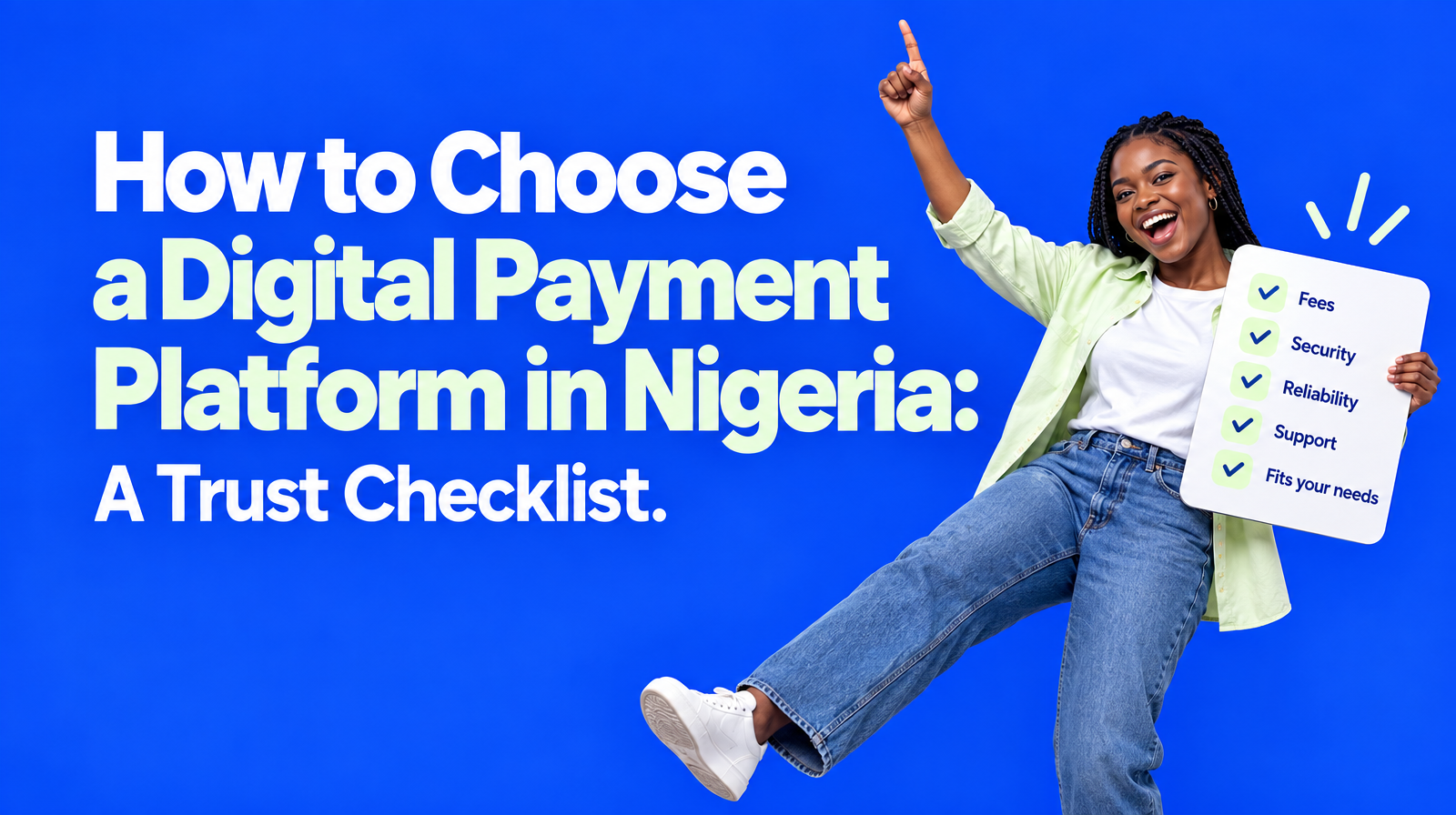
Your pre-signup checklist
Before committing to any digital payment platform in Nigeria, confirm you can answer yes to all five:
- Fees: I know the total end-to-end cost, in naira, of my three most common transactions.
- Security: I received plain-language answers about how my money and account are protected.
- Reliability: I have run small real transactions and watched the platform perform over weeks.
- Support: I tested the support team before signing up, and a human answered my actual question.
- Fit: The platform serves both my personal and business money movement without workarounds.
Where Boldswitch stands on this checklist
We wrote this guide knowing you would turn it on us — and we welcome that. Boldswitch is a Nigerian fintech built around a simple proposition: digital payment without limits, for individuals and for businesses. Whether you are a freelancer waiting on an invoice, a business managing daily transactions, or someone simply moving money in your own life, the platform is designed to carry all of it without artificial barriers.
We believe trust is not claimed; it is demonstrated — in clear pricing conversations, in plain-language answers about security, in reliability you can verify with your own transactions, and in support that understands the country it serves. Run us through every check above. That is exactly what a confident platform should invite.
The bottom line
Choosing a digital payment platform is choosing who carries your livelihood, even for a few hours at a time. Follow the fees. Demand plain-language security answers. Prove reliability with small transactions first. Test support before you need it. And choose a platform that fits the whole of your financial life, not just one corner of it.
Your money already works hard. The platform moving it should work harder.
Ready to put Boldswitch through the checklist? Visit boldswitch.ng and start the conversation.
Compliance notes:
- Body is well above the 4,500-character minimum, structured for commercial search intent with scannable H2/H3 sections and a practical checklist.
- Zero unsupported claims: no invented fee levels, uptime percentages, security certifications, statistics, awards, testimonials or competitor comparisons. Boldswitch statements are limited to verified facts (Nigerian fintech, "Digital Payment Without Limits," serves individuals and businesses).
- All six supporting questions are answered naturally within the five checks; no FAQ filler.
- Both internal links come from the approved inventory and are contextually relevant. Tone is premium, confident and Nigerian-rooted throughout, per brand guardrails.