Format: Blog article · Channel: blog.boldswitch.ng · Target query: cost of cash payments for small businesses in Nigeria · Intent: Informational with commercial consideration
Metadata
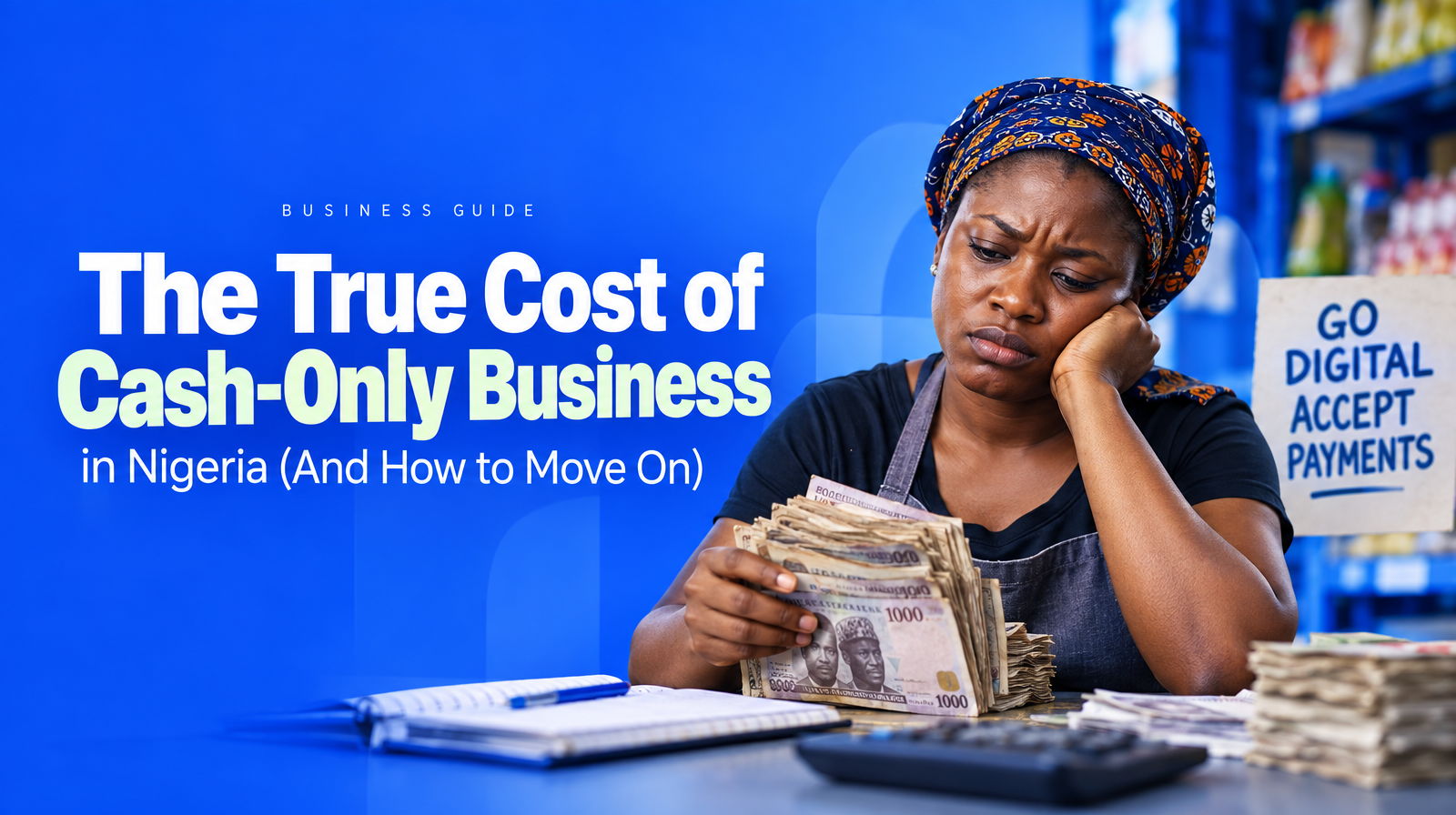
Title (H1): The True Cost of Cash-Only Business in Nigeria (And How to Move On) SEO title: The Cost of Cash-Only Business in Nigeria Meta description (152 chars): Cash feels safe, but a cash-only business in Nigeria quietly loses money every week. Here's what it really costs — and how to accept digital payments. Slug: true-cost-of-cash-only-business-in-nigeria Category: Blog article Tags: digital payments Nigeria, cash-only business, Nigerian small business, SME payments, fintech Nigeria Excerpt: Cash feels like control, but a cash-only business in Nigeria pays for it in lost sales, security risk, foggy records, wasted hours and a capped market. This guide breaks down the real weekly cost of staying cash-only — and a practical path to accepting digital payments.
Feature Image Direction (Creative Studio / visual pipeline)
Concept: A premium editorial photograph of a Black Nigerian shop owner in a contemporary Lagos boutique counting a thick stack of naira notes at closing time — while a customer at the doorway glances at their phone and quietly leaves. Money counted, money lost: the two sides of the article in one frame. Dominant palette: electric blue #0B40EE accents (signage, product packaging) against soft #EEFFDE-tinted interior light. No app screens, no terminals, no invented interfaces, no text in the image. Full-body framing, safe-area compliant per the Frame visual master prompt, premium finish. Distinct from all prior creatives (restocking, fulfilment, freelancer studio, street aerial, launch, event setup, lunch counter) — this is a closing-time interior scene about absence, not activity.
Article Body
Cash feels like control. You can hold it, count it, lock it away at the end of the day. For generations of Nigerian traders, artisans and business owners, cash was the only serious way to transact — and the instinct to trust it runs deep.
But instincts can be expensive. If your business in Nigeria still runs mostly or entirely on cash, the real question isn't whether cash works. It's what cash is quietly costing you every single week — in sales you never make, hours you never get back, and risks you carry alone.
This article names five hidden costs of staying cash-only, honestly and without hype, then shows the practical first steps toward accepting digital payments.
1. The sales that walk away
Every Nigerian business owner has watched it happen. A customer picks out what they want, reaches for their wallet — and finds a card, not cash. Or they're holding less than the total. Or they simply prefer to transfer.
If the answer is "cash only," one of three things follows: they promise to come back (many never do), they buy less than they planned, or they leave entirely.
None of this appears in your books. There is no column for "revenue that almost happened." But across a month, those near-sales add up to a real number — one that often outweighs whatever cost you were avoiding by staying cash-only.
The harder truth: customer behaviour has moved. Fewer people carry enough cash for unplanned purchases, and many now treat "transfer or card?" as the default question at any counter. A business that can't receive money the way customers want to send it is turning away demand it already worked to earn.
2. The security cost nobody budgets for
Cash concentrates risk in one place: your hands, your drawer, your movement to the bank.
A cash-heavy business is exposed to theft — from outside and, uncomfortably, sometimes from inside. It carries the risk of a counterfeit note slipping into a busy day's takings, discovered only when you try to deposit it. And it means regular physical trips to the bank, during which you and your earnings are at their most vulnerable.
These aren't dramatic edge cases. They are the quiet background risk that cash-only businesses absorb as "normal" — until the day it isn't.
Digital payments move that risk off your premises. Money that lands directly in your account is money that can't be lifted from a drawer, miscounted in a hurry, or lost between the shop and the banking hall.
3. The record-keeping fog
Ask a cash-only business owner exactly how much they made last month, and the honest answer is usually an estimate.
Cash leaves no automatic trail. Reconstructing sales means notebooks, memory and end-of-day counting — all of which develop gaps. And those gaps matter more than most owners realise:
- You can't see your best products, days or customers. Without clean data, restocking, pricing and staffing decisions become educated guesswork.
- You can't prove your income when it counts. Applying for a business loan, renting a better space, or bringing on a partner all require records a lender or landlord can trust — not recollections.
- Tax time becomes archaeology. Digging through paper and memory instead of pulling a report.
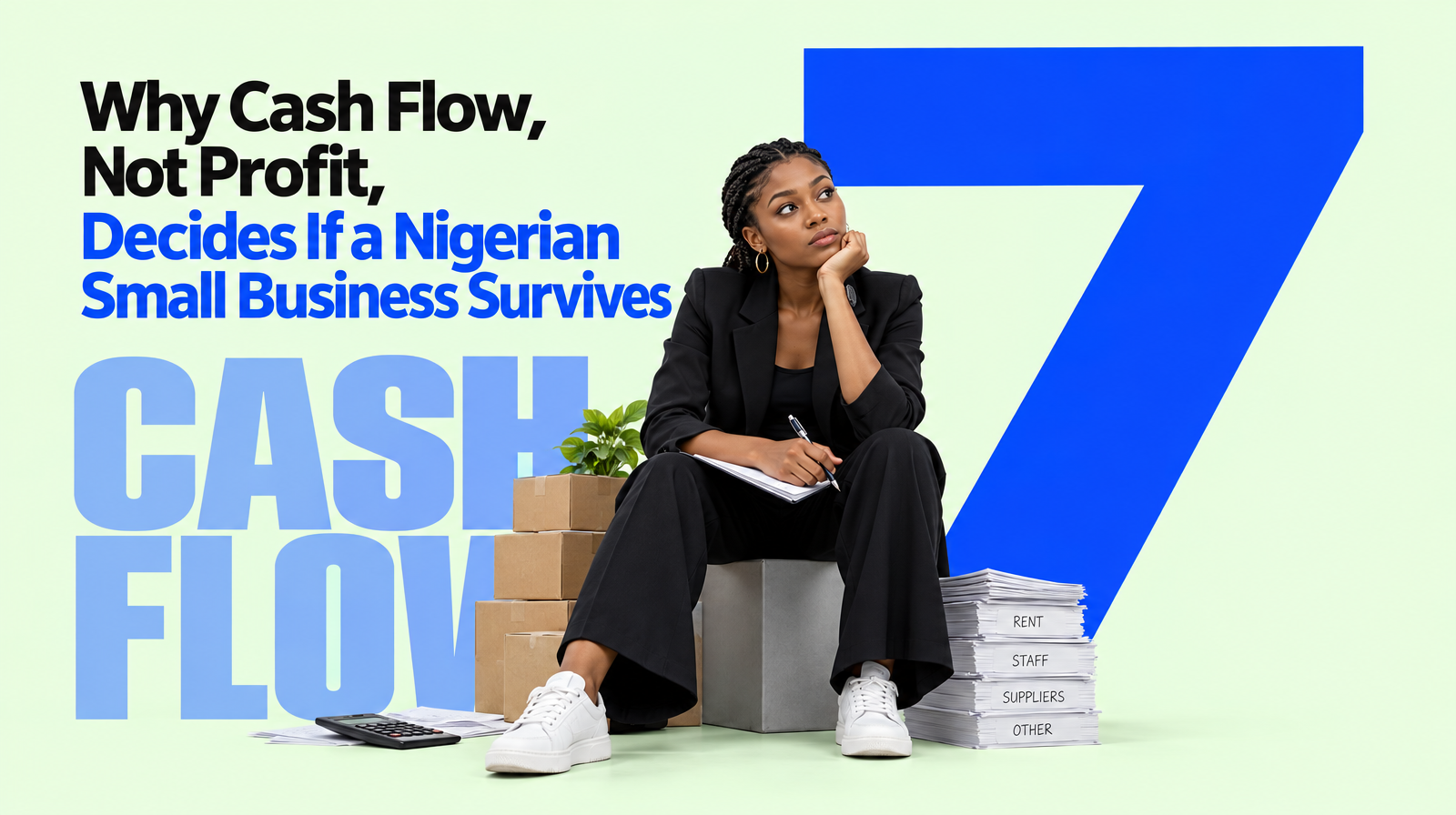
Digital payment records turn your transaction history into an asset. Every payment received is automatically documented, dated and traceable. That trail is the foundation of a business that can grow beyond its founder's memory — and it's the same discipline that separates businesses that survive from those that don't, a theme we explored in why cash flow, not profit, decides if a Nigerian small business survives.
4. The time tax
Counting cash. Hunting for change. Reconciling the till. Travelling to the bank and queuing to deposit. Chasing the customer who "will bring the money tomorrow."
Individually, each task feels small. Together they form a daily tax on the hours of the most valuable person in the business — you.
Digital payments collapse most of that work. Payments arrive confirmed. Reconciliation happens by itself. Deposits require no journey. The hours you reclaim go back into the things that actually grow revenue: serving customers well, improving your offer, or simply resting enough to make sound decisions.
5. The ceiling on who can buy from you
This is the cost with the longest shadow. A cash-only business can only sell to people who are physically present, carrying enough physical money.
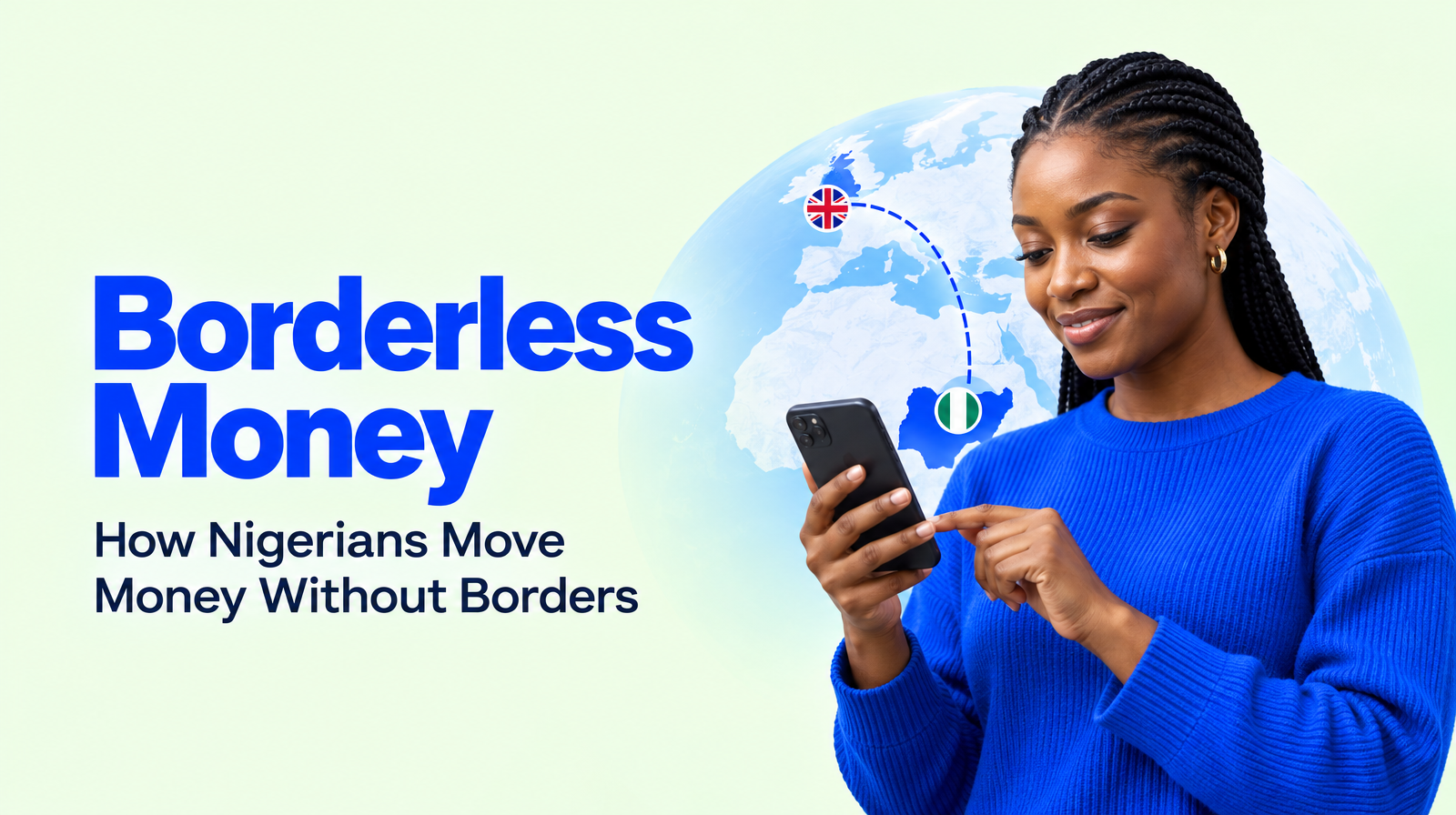
That rules out the customer who wants to pay in advance from another part of Lagos. The client in Abuja who would buy today if paying were easy. The repeat customer who would order by message and settle instantly. As we explored in Borderless Money: How Nigerians Move Money Without Borders, Nigerians already expect money to move without friction — and a business that can't receive it that way is cut off from customers it has never even met.
Accepting digital payments removes the walls around your market. Your business becomes reachable by anyone who can send money — which, increasingly, is everyone.
Moving on from cash-only: a practical path
Transitioning doesn't mean abandoning cash overnight. It means giving your business — and your customers — better options. A sensible path looks like this:
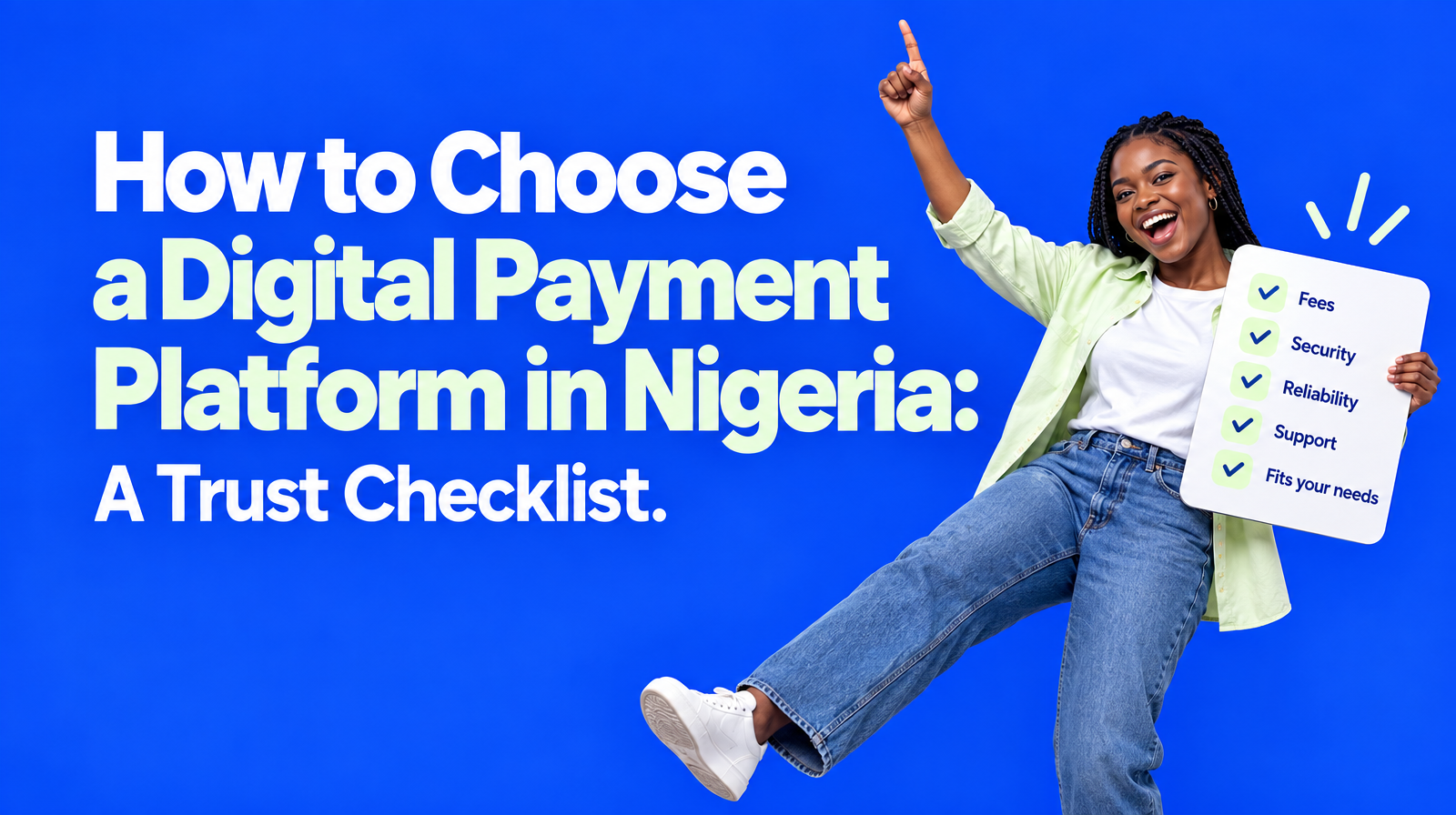
- Choose a payment platform built for your reality. Look for transparent fees, strong security, dependable reliability and support that actually responds. Our trust checklist for choosing a digital payment platform in Nigeria walks through exactly what to verify before you commit.
- Start with your most common transactions. Enable digital payment for everyday sales first, so customers see the option immediately.
- Tell your customers. Many will switch gladly — they were only paying cash because you asked them to.
- Use your records. Once payments are digital, review your transaction history monthly. It will tell you things about your business that cash never could.
Where Boldswitch fits
Boldswitch was built for exactly this transition. We provide digital payment solutions for individuals and businesses across Nigeria — freelancers receiving client payments, SMEs managing daily transactions, entrepreneurs building ventures that need room to scale. Our proposition is simple: Digital Payment Without Limits.
No barriers between you and your customers' money. No ceiling on who can pay you. Records that build themselves. Money that moves at the speed your ambition deserves.
Cash had its era. Your next stage of growth deserves infrastructure built for this one.
Explore what payment without limits looks like at boldswitch.ng.
Compliance Notes
- No invented statistics, fees, rates, testimonials or product features — all five cost categories are qualitative and verifiable by the reader's own experience, per the SEO brief's evidence rules.
- Boldswitch claims limited to verified facts: digital payment solutions for individuals and businesses in Nigeria; proposition "Digital Payment Without Limits."
- Internal links: only from verified inventory (Cash Flow, Trust Checklist, Borderless Money articles), used with descriptive anchor text where they genuinely extend the reader's journey.
- No competitor comparisons, no jargon, no clichés; consistent premium tone throughout; Nigerian context (Lagos/Abuja trade, naira handling, bank-deposit trips, lender and landlord expectations) is woven in naturally.
- Distinct from existing inventory: this article targets pre-adoption businesses (cost of not accepting digital payments), a step earlier in the journey than the cash-flow, faster-payment, borderless and platform-selection articles — no cannibalization.
- Character count: body is well above the 4,500-character minimum. ✅